


Emotional Self-Defense: How to Spot a Manipulator in 5 Minutes and Not Let Them "Eat You Alive"
You know the feeling. You’ve just spoken to someone — a colleague, a relative, or an acquaintance. The conversation lasted five minutes. But you feel as if you’ve been emotionally run over by a truck. You feel guilty, confused, or even "broken."
The most paradoxical thing about this situation is that you start blaming yourself. "Maybe I really said the wrong thing?", "Maybe I was too harsh?".
Congratulations, you’ve just been "processed." No hypnosis, no black magic, no smoke and mirrors. Just everyday, mundane manipulation.
Many of us live with the belief: "I need to be kind, polite, and convenient." But, as Dmytro Telushko, author of the MriyaRun project, points out, some people perceive your kindness as a direct invitation to break into your head and rearrange the furniture.
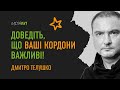
Today, we’re skipping the excessive theory and talking about reality. How can you realize in seconds that you are being manipulated? How do you respond so that no one dares to attack again? And how does working on personal boundaries help, specifically with tools like the "Diary of the Mistress of Her Boundaries".
The Silent War: "Nothing Happened," or Passive Aggression
A classic genre everyone has encountered. You see a person walking around as gloomy as a storm cloud. They slam doors, sigh loudly, or look right through you.
— Is something wrong? — you ask with sincere concern.
— Nothing. — they reply in an icy tone.
This is passive aggression. The person consciously creates a gap between their words ("everything is fine") and their behavior (resentment, ignoring).
What is the core of this manipulation?
Its goal is to make you run around, feel anxious, play "psychic," and beg for forgiveness for something you probably didn't even do. The manipulator fears open conflict, so they shift the responsibility for their mood onto you.
How to defend yourself?
Your task is not to play this game. Return the responsibility for emotions to their owner. Don't become a telepath.
- Shield Phrase (Calm):"Okay. If you want to talk, I'm ready to listen."
- Shield Phrase (For those who don't get it the first time):"I notice that your words don't match your state. I'm not going to guess what happened, but when you're ready for a direct conversation — I'm here."
This way, you show that you are ready for an adult dialogue, not childish silent treatment games.
Heavy Artillery: 4 Phrases That Kill Self-Esteem
If the "silent treatment" didn't work, the manipulator brings out the heavy artillery. Dmytro Telushko identifies four types of "killer phrases" designed to make you feel worthless.
1. The Guilt Trip
“I did so much for you, and you...”, “I thought we were friends...”
They are trying to put you in debt. You are supposed to feel like an ungrateful villain.
Your answer:
"I appreciate everything you've done for me, but that doesn't mean I have to agree to everything. Let's discuss this like adults."
2. Shaming
“Aren't you ashamed of yourself?”, “How can you say that to your mother/boss/friend?”
This is a direct attack on your sanity. They make you doubt your right to your own emotions.
Your answer (calmly):
"My feelings are my responsibility. But what exactly in my actions causes such a reaction in you?"
3. "I Just Wanted What Was Best"
This is the favorite phrase of those who give unsolicited advice or interfere in your life, and when they get pushed back, they make you the guilty one. As if you didn't appreciate their "holy sacrifice."
Your answer:
"I understand that you had good intentions. But next time, please ask me first if I need help. This is important to me."
4. Whataboutism (Deflection)
You try to say that you are hurt, and in response, you hear: “But what about you?! Look at yourself! Remember how you in 2010...?”
The manipulator's goal is to shift the focus from their behavior to your flaws.
Your answer (firmly):
"Right now, we are talking about my discomfort in this specific situation. We can return to discussing my actions later. So, back to the topic..."
Dmytro Telushko’s Main Rule: Never make excuses! As soon as you start making excuses, you have admitted the other person's right to judge you.
Devaluation: "You Just Can't Take a Joke"
This is the abuser's "nuclear weapon." First, they insult you, sting you with a painful word, and when you react, they accuse you of lacking a sense of humor.
- “It was just a joke!”
- “You take everything too personally.”
This is a mild form of gaslighting. They are trying to prove that your reaction is inadequate and your feelings are unimportant.
How NOT to answer: "No, I'm not offended." This is a trap.
How TO answer: Use the "Acknowledge, Don't Argue" strategy.
- Direct: "Maybe it's a joke to you, but it sounds insulting to me. Please don't do that."
- Using "I-statements": "When you joke like that, I feel irritated. Please stop."
- Icy Calm: "That's not funny." (Followed by a long pause, looking them in the eye).
Where to Find the Strength for These Answers?
Knowing the right phrases is only half the battle. The second half is having the internal resource to say them. Often, we automatically fall into the victim role because our boundaries have been erased by years of the habit of "being convenient."
Changing the behavioral script requires practice. This is exactly why the “Diary of the Mistress of Her Boundaries” was created.
It is not just a notebook, but a self-therapy tool from the MriyaRun project. It helps to:
- Track moments when your boundaries are violated.
- Analyze your emotions instead of suppressing them.
- Practice new reactions (exactly the ones we talked about above).
Remember: your kindness is a gift, not an obligation. And only you decide who to give this gift to, and before whom to close the door.