


This material is for informational and educational purposes only and is not medical, psychological, or psychotherapeutic advice. If you are experiencing an acute psychological condition or need professional support, please contact a doctor, psychologist, psychotherapist, or crisis service.
Hans-Christian Schmid's film "Requiem" (2006) is one of the deepest and most realistic cinematic perspectives on the story of Anneliese Michel. Unlike Hollywood horror movies (such as "The Exorcism of Emily Rose"), Schmid completely abandons mysticism and special effects. He offers the viewer a harsh, almost documentary-like psychological drama, where the real "demon" turns out to be not an otherworldly force, but an untreated mental illness multiplied by religious fanaticism and a toxic family environment.
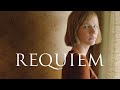
Here is an extended psychological breakdown of the main themes and conflicts of this picture.
Michaela's Psychological State: On the Verge of Neurology and Psychiatry
The main character, Michaela Klingler, suffers from epilepsy, but her symptoms go far beyond ordinary seizures.
- Religious Delusion and Psychosis: What Michaela and her environment interpret as "possession" is viewed by modern psychiatry as epileptic psychosis or schizophrenia with pronounced religious delusions. The voices she hears and her inability to touch sacred objects are projections of her own fears and a deeply rooted sense of guilt.
- Somatization of Guilt: Any deviation from strict rules (dancing, light flirting, attempting to live a normal student life) causes her such a powerful internal conflict that her psyche cannot withstand it and reacts physically — through seizures and hallucinations. The body literally punishes itself for "sin."

Requiem Movie (2006)
Toxic Family Dynamics
Michaela's family plays a fatal role in the development of her condition. This is a classic example of a dysfunctional family with rigid roles.
- Authoritarian, Emotionally Cold Mother: Michaela's mother controls her every step. She uses religion not as a source of comfort, but as an instrument of suppression and control. For her, her daughter's illness is a stigma and God's punishment. She does not give Michaela the right to her own desires and harshly punishes her with psychological rejection for any attempts at separation.
- Passive Father: The father loves Michaela and tries to support her (he is the one who helps her go to college), but he is too weak to stand up to his wife or take responsibility for his daughter's medical treatment. His passivity becomes a silent consent to the tragedy.

Requiem Movie (2006)
Separation Crisis and Fear of Growing Up
Moving to the university becomes a catalyst for Michaela's illness. This is a classic separation crisis:
- Clash of Two Worlds: In Tübingen, she encounters the free life of the 1970s. She makes a friend and gets a boyfriend, she tastes freedom. However, her psyche, formed in an isolated conservative environment, lacks the adaptive mechanisms to process this new experience.
- The Unbearableness of Freedom: For Michaela, freedom equals sin. Every time she takes a step towards a normal life, her strict Super-Ego (the inner critic formed by her mother and the church) strikes in the form of intensified psychotic symptoms.

Requiem Movie (2006)
The Role of Religion: Exorcism as Psychological Abuse
The film brilliantly shows how religion can become an accomplice to psychological murder.
- Validation of Delusion: Instead of referring the girl to a psychiatric hospital, the priests agree to an exorcism. Psychologically, this is the worst thing that could have been done: authoritative figures confirmed to Michaela that her hallucinations were real, that demons existed, and that they were inside her.
- Folie à plusieurs (Shared Psychosis): What happens during the exorcism rituals is a form of collective madness. The family and the priests actually feed Michaela's psychosis, and she, in a state of profound suggestibility, begins to play the role of the "possessed" because it is the only way to get attention and explain her suffering in a language her environment understands.
- Exorcism as Legalized Self-Destruction: Through the ritual, Michaela gets a false sense of being "chosen" (the idea that she is suffering for the sins of the youth). This is the megalomania that often accompanies severe psychoses, and which allows her to find at least some meaning in her torment, even at the cost of her own life.
Conclusion
"Requiem" is not a film about the devil. It is a chilling exploration of how a lack of empathy, medical negligence, religious dogmatism, and the fear of psychiatric diagnoses can corner a person. Michaela was not possessed by demons — she was a hostage to her illness and a toxic environment that chose to fight mythical spirits instead of treating a real person.

Requiem Movie (2006)
Insight from MriyaRun: When the Inner Critic Becomes a "Demon"
Michaela’s tragedy in Requiem is the ultimate, fatal stage of conflict within the personality structure. Her story demonstrates what happens when a hypertrophied Externalized Parent (embodied in an authoritarian mother and dogmatic religion) completely obliterates the Free Child's right to exist.
Michaela's true Shadow is not an otherworldly force. Her "demons" are her own natural bodily impulses, her desire to separate, to feel freedom, and her absolutely suppressed, unlegitimized anger. Because any manifestation of her own desires triggers toxic resentment towards herself and a profound sense of guilt, her psyche fractures. Instead of activating her Adult state and drawing clear "red lines" (personal boundaries) in her relationship with her family, she unconsciously chooses the path of self-destruction.
Exorcism, in this context, is absolute capitulation to the Inner Critic. It is the extreme form of the "Imposter" script, where a person disbelieves their right to be "normal" so deeply that they accept the most terrifying verdict: "I am so fundamentally flawed that I am controlled by absolute evil."
Key Thoughts for Reflection:
- The Cost of Suppressed Emotions: If a person lacks the tools to understand and live through their anger and fear, these emotions become somatized and can tear the psyche apart from the inside.
- The Responsibility of the Adult: Handing over responsibility for one's life and mental health to mystical concepts or "authorities" without critical thinking leads to disaster.
- The Shadow Needs Light, Not Exorcism: What we consider our internal "demons" (fears, aggression, shame) should not be banished, but integrated, understood, and legitimized.